
On-demand & utility apps
Apps built around a single, urgent daily-life need, engineered for speed over feature count.

Vibrant Info builds lifestyle and consumer app development solutions for products people open daily, not once. We built Woloo, a location-based consumer app that helps people find the nearest hygienic washroom - a deceptively simple idea that depends entirely on location accuracy, uptime, and an interface that works in a genuine hurry. Lifestyle apps live or die on reliability at everyday scale, and that's the standard we hold every build to.
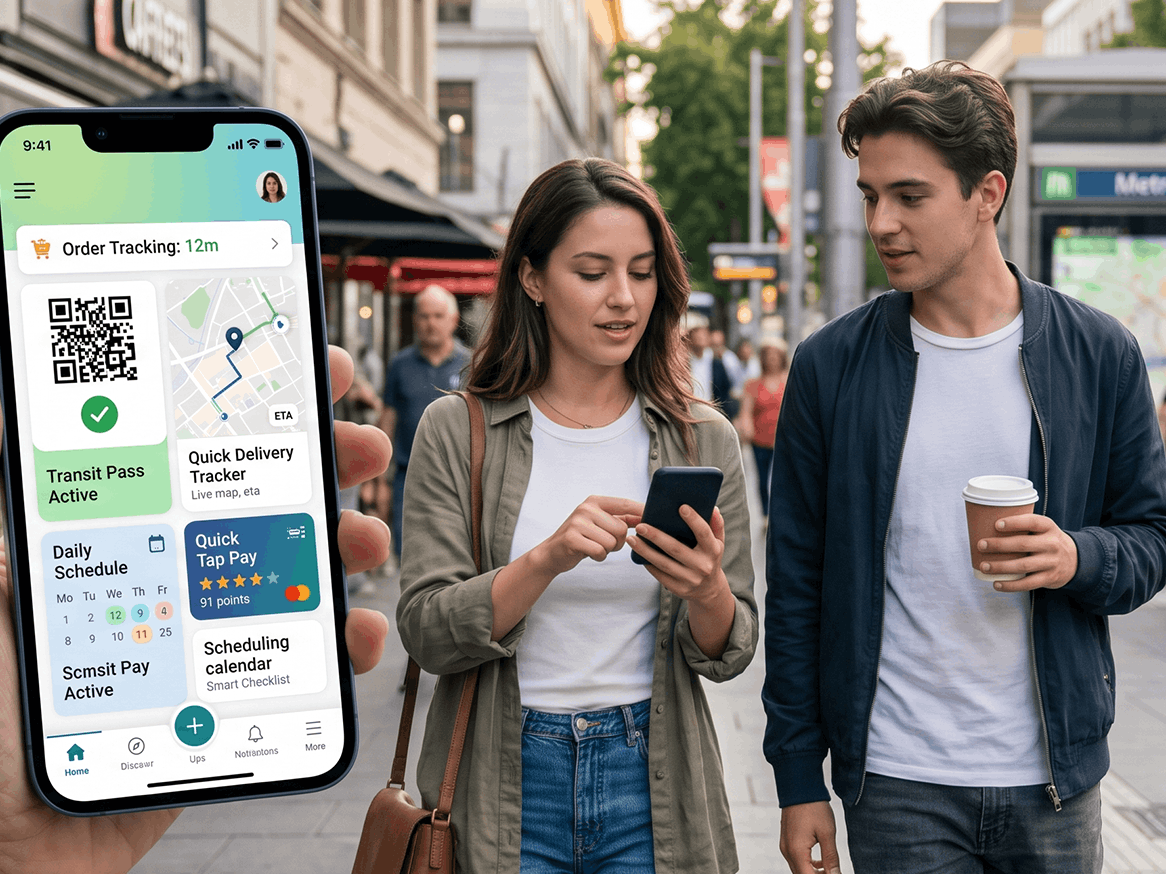
Woloo set out to solve a real, everyday problem: finding a clean, nearby washroom in an unfamiliar part of a city. Vibrant Info built the app around fast, accurate location search and a simple, reliable interface, because a lifestyle utility app only earns repeat use if it works instantly, every time, for a need that’s often urgent. That focus on everyday reliability – not feature count – is what separates a lifestyle app people open once from one they keep.
Lifestyle and consumer apps compete in the most crowded software market there is – India generates around 25 billion app downloads a year and remains the world’s largest mobile app market by volume, according to Sensor Tower’s State of India Mobile App Market report. Standing out in that volume isn’t about having more features than a competitor; it’s about being reliably useful for one specific moment in someone’s day, consistently enough that they don’t uninstall after the first try.
For us, lifestyle app development means treating location accuracy, load time, and poor-connectivity handling as core product requirements, not edge cases – because a consumer utility app is judged the moment it’s needed most, often on patchy mobile data, not in a controlled demo. We build for founders who’ve validated a lifestyle or utility idea and need a production-grade app that holds up at real daily-use scale.
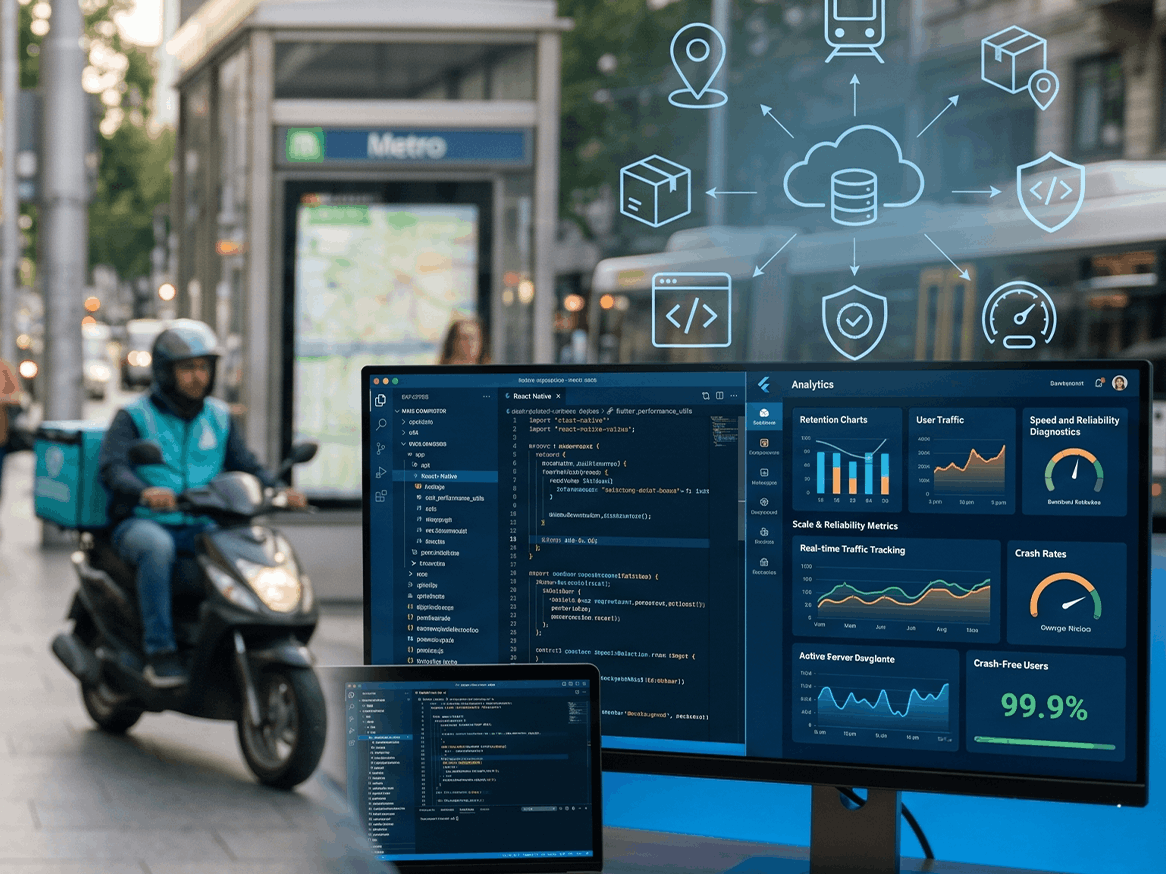
The app works well in a demo but breaks down under real conditions - patchy mobile data, older devices, low battery.
Performance engineering built around real-world Indian mobile conditions, not just flagship-device demos.
Location-based search is slow or inaccurate, undermining the app's entire value proposition.
Location and search infrastructure tuned for speed and accuracy first, since that's usually the single feature the app lives or dies on.
Users install the app once and don't come back, because nothing was designed to build a daily-use habit.
Retention-focused product design - notifications, repeat-use flows, and onboarding - built around the specific moment your app solves for.
The founding team validated the idea with an MVP but needs a production-grade rebuild to scale past early users.
A rebuild scoped around your validated use case, engineered for scale from the start instead of patching an MVP indefinitely.
Fast, accurate location search and mapping - the foundation every hyperlocal or utility app depends on, as it was for Woloo.
Apps built around a single, urgent daily-life need, engineered for speed over feature count.

React Native and Flutter builds that ship to iOS and Android from one codebase without compromising performance.

UX built for a hurried, often first-time user - minimal steps between opening the app and solving the problem.

Apps tuned for patchy connectivity and older devices, the real-world condition most Indian consumer apps are used in.

Notification systems and usage analytics built to turn a one-time install into a daily habit.
Not sure which piece to build first? Most engagements start with a two-week discovery sprint - you walk away with a scoped roadmap and a fixed estimate, whether or not you build it with us.
We build for real Indian network conditions, not a flagship-phone demo.
The result is a consumer app your own team can maintain long after launch, not a black box only we can touch.
Most consumer apps ship a first release in 10–14 weeks from discovery to launch, with iterative feature releases after.
Yes - rebuilding a validated MVP into a production-grade app, without starting the product discovery over, is a common starting point for us.
iOS and Android, usually via React Native or Flutter for a shared codebase, unless a specific feature genuinely needs a native-only approach.
Location and performance are treated as core requirements from the architecture stage, tested against real network and device conditions, not just flagship phones on Wi-Fi.
Yes - ongoing app maintenance covers monitoring, OS updates, and iteration as your user base grows.