
Order & batch management
Systems that track an order from cut plan to dispatch, so status is one query away instead of a floor walk.

Vibrant Info builds garment manufacturing software development solutions that digitize the factory floor - production-tracking and order-management systems that give apparel manufacturers floor-to-dispatch visibility in minutes, not end-of-day paper reports. Where a licensed apparel ERP doesn't fit a manufacturer's specific line workflow, or a factory needs something lighter than a full ERP rollout, we build production-tracking, order-management, and dispatch-visibility software scoped to how the floor actually runs.
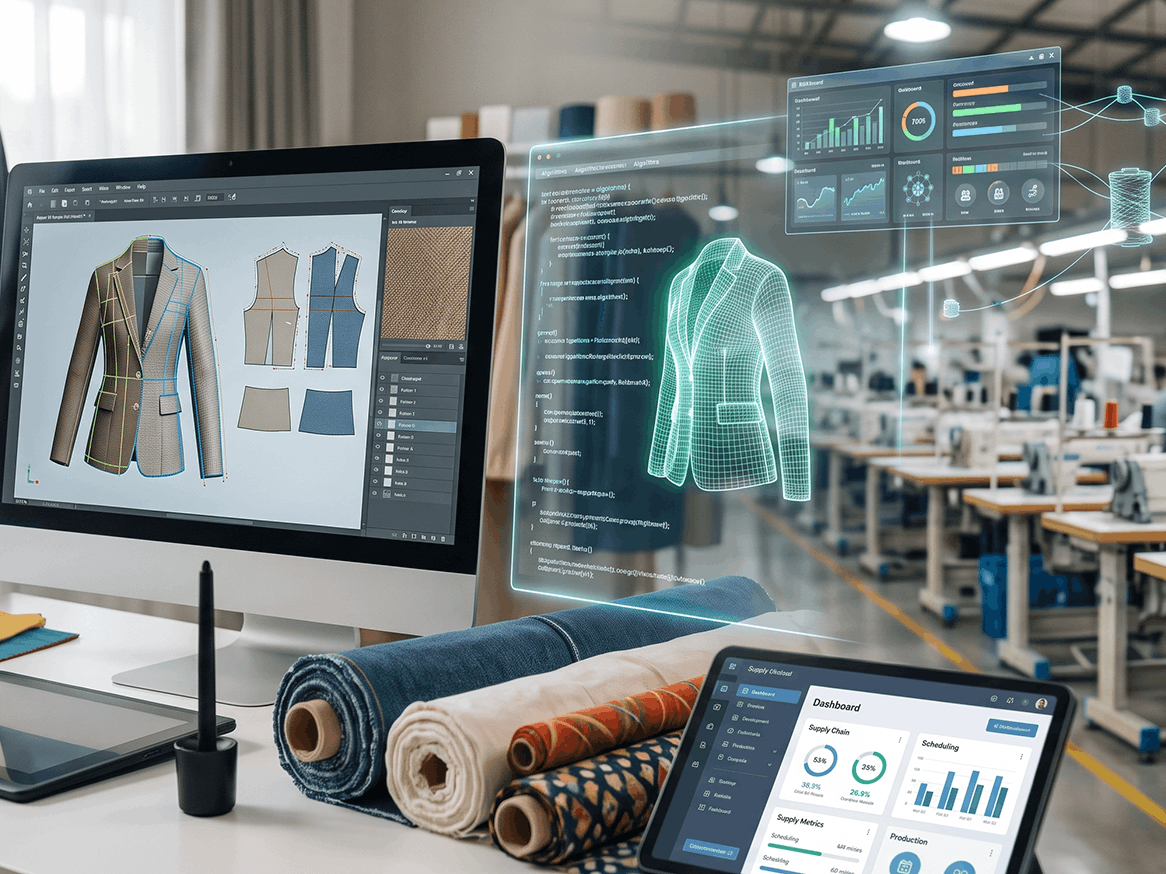
Built for how the floor actually runs
Garment manufacturing runs on batches, cut-to-ship timelines, and dozens of small handoffs between cutting, stitching, quality checks, and dispatch – and most delays get discovered a day late, from a paper report, after the shipment window has already tightened. We build software that surfaces that information as it happens: which batch is at which station, which order is behind schedule, and which shipment is at risk before the dispatch deadline, not after.
India’s textile and apparel industry is one of the country’s largest, with the sector’s value expected to grow substantially through 2025–26 and India ranked among the world’s largest textile manufacturers, accounting for a meaningful share of global textile production (Ginesys). That scale is exactly why floor-level visibility matters – a manufacturer running a handful of export orders can track progress by walking the floor, but a factory running dozens of styles and cut orders in parallel can’t, without software built for that specific workflow.
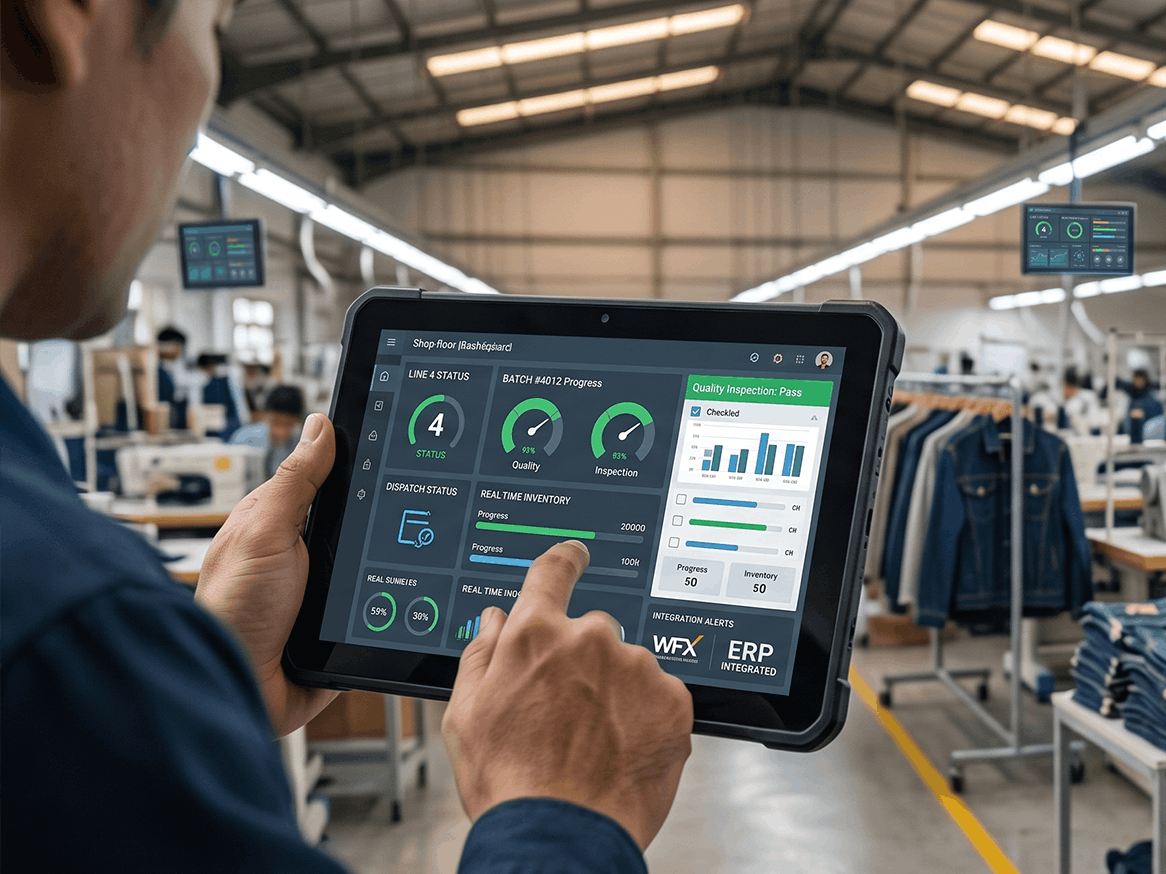
For us, garment manufacturing software development means production-tracking and order-management systems purpose-built around cutting, stitching, quality control, and dispatch stages – not a generic manufacturing ERP module repurposed for apparel. We build both stand-alone dashboards for factories that already run an ERP like WFX, Logic ERP, or Ginesys and just need better shop-floor visibility, and full production-tracking systems for manufacturers who need something built around their specific line configuration.
Production status is only visible at end-of-day, from a paper or spreadsheet report, by which point a delay is already a day old.
Real-time production-tracking dashboards that show batch and order status as it happens on the floor, not after shift-end.
The factory runs a licensed apparel ERP, but it doesn't reflect the specific line configuration or handoffs unique to this factory.
Custom dashboards and integrations layered on top of your existing ERP (WFX, Logic ERP, Ginesys, or others), built around your actual floor workflow.
Quality-control rejects are caught late in the process, after fabric and labour have already been committed to a batch.
Stage-by-stage quality-tracking tools that flag rejects at the point of inspection, not at final packing.
Dispatch deadlines get missed because no one has visibility into which orders are behind schedule until shipping day.
Order-level dispatch tracking that flags at-risk shipments early enough to act, tied to the actual cutting-to-ship timeline.
Real-time visibility into which batch is at which stage - cutting, stitching, QC, packing - replacing end-of-day paper reports.
Systems that track an order from cut plan to dispatch, so status is one query away instead of a floor walk.

Stage-by-stage inspection logging that catches rejects early, before fabric and labour are sunk further into a batch.

Order-level dispatch tracking tied to shipping deadlines, flagging at-risk orders while there's still time to act.

Custom dashboards layered on top of WFX, Logic ERP, Ginesys, or other apparel ERPs your factory already runs.

Raw-material and vendor tracking that connects procurement timing to production schedules.
Not sure which piece to build first? Most engagements start with a two-week discovery sprint - you walk away with a scoped roadmap and a fixed estimate, whether or not you build it with us.
We layer on top of what you run today, not force a platform switch.
The result is a production-tracking system your own team can maintain long after launch, not a black box only we can touch.
Yes - most of our garment manufacturing projects layer a custom dashboard or integration on top of an existing apparel ERP, rather than replacing it.
Most factory dashboards ship in 8-12 weeks from discovery to launch, depending on how many stages and data sources need to be tracked.
Not necessarily - many production-tracking systems run on existing tablets or shared terminals at each station; barcode or RFID hardware is only added where it genuinely speeds up data entry.
Yes - multi-location dashboards that roll production and dispatch status up to a single view are a common requirement for manufacturers running more than one unit.
Yes - ongoing maintenance covers monitoring, updates, and iteration as your line configuration or order volume changes.