
Configurator & customisation tools
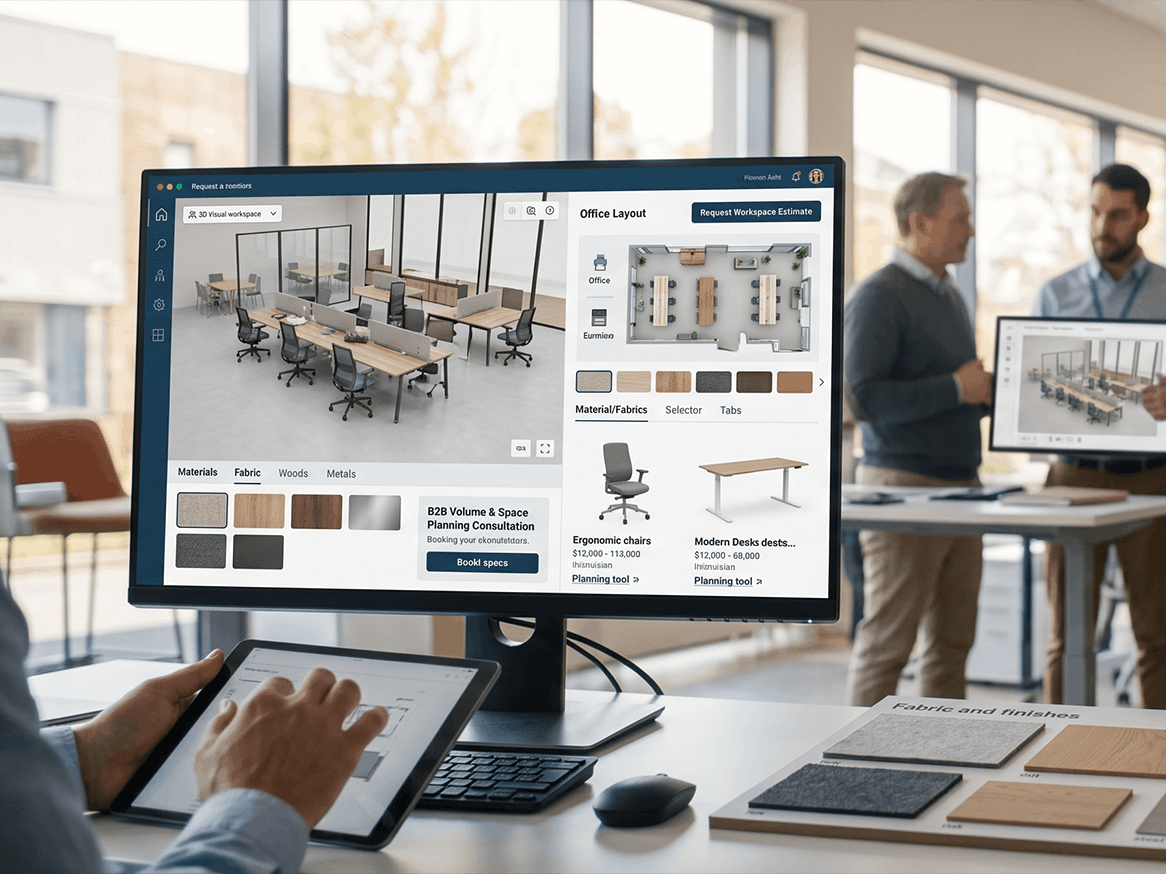
Product configurators for brands offering material, finish, or size variants, so buyers can visualise before requesting a quote.

Vibrant Info builds websites and product catalogs for office furniture and workspace-solutions brands - digital experiences engineered to showcase ergonomic, durable designs and support the longer, more considered purchase cycle B2B furniture buyers go through. A furniture buyer researching seating or workstations for an entire office isn't making an impulse purchase, and the website has to carry that decision through specs, materials, and bulk-order logistics, not just product photography.
Built for a considered B2B purchase
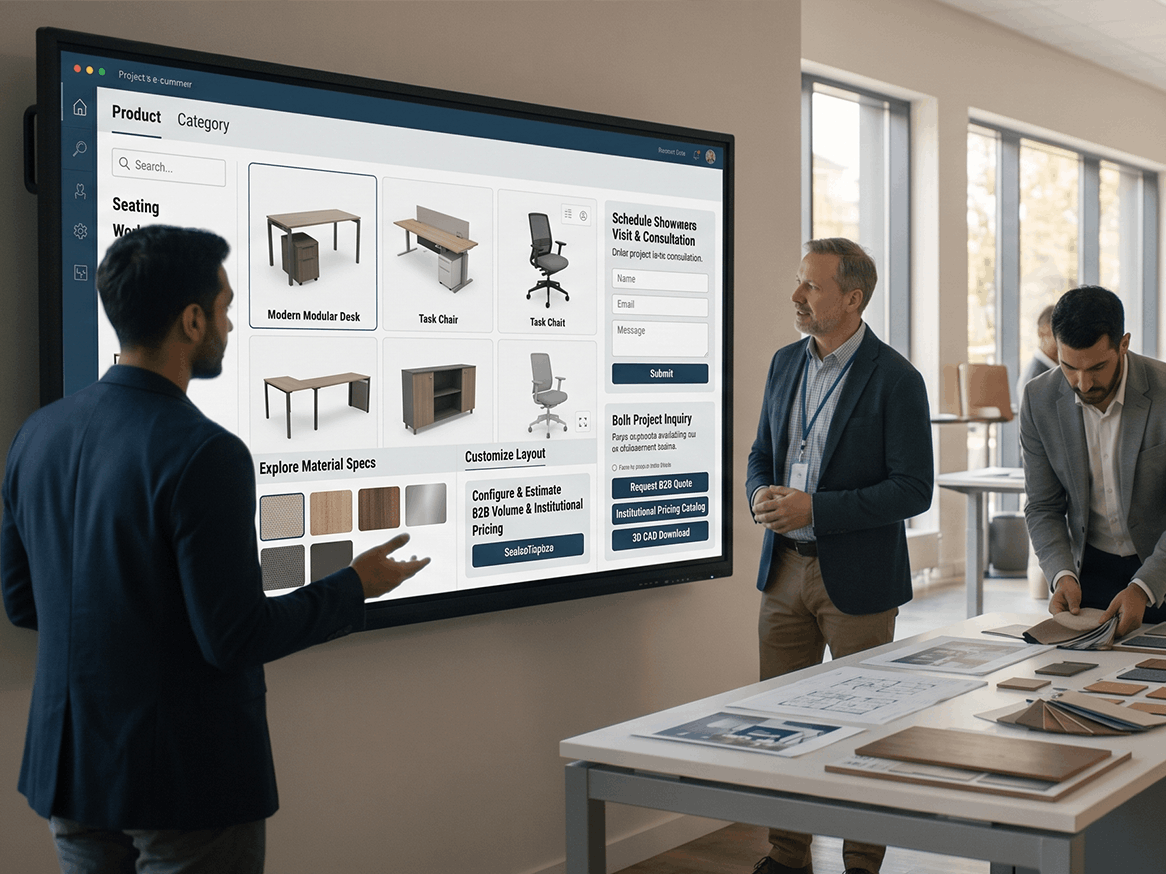
Office furniture and workspace-solutions purchases usually involve more than one decision-maker, a spec sheet, and a quote request, not a one-click checkout. We build catalog websites and B2B ordering portals designed around that reality – clear product configuration, material and dimension detail, and a quote-request flow that gets a sales team the right information the first time, instead of a back-and-forth email chain.
India’s office furniture market is a genuinely large and growing category – IMARC Group values it at roughly $6.3 billion in 2025, projected to reach $14.1 billion by 2034 – driven by hybrid work, open-office layouts, and rising corporate investment in ergonomic workspaces. That growth is pulling more of the buying process online, even for a category that closes offline through a sales conversation, which means a manufacturer’s website increasingly decides whether it gets that conversation at all.
For us, office furniture and workspace-solutions website development means building product catalogs, configurators, and B2B lead-capture flows around how furniture is actually bought – researched online, shortlisted by spec and material, then closed through a quote or a showroom visit. We work with manufacturers and brands across seating, workstations, storage, and full workspace-solutions ranges, building the digital front door to a sales process that still ends with a human conversation.
The website shows product photos but not the specification, material, or dimension detail a B2B buyer needs before shortlisting.
Detailed, structured product pages with specs, materials, and dimensions presented the way a facilities or procurement buyer actually evaluates furniture.
Quote requests come in as vague emails that sales teams have to chase for missing information.
Structured quote-request flows that capture product, quantity, and project details up front, so sales gets a usable lead, not a one-line email.
The catalog is hard to browse by use case (office type, room, seating capacity), so buyers can't find relevant products quickly.
Catalog navigation and filtering built around how buyers actually shop - by space type, use case, and budget - not just product category.
The brand has dealers or distributors, but the website gives buyers no way to find one near them.
Dealer and distributor locator tools that connect an online browse session to an offline sales relationship.
Structured, filterable catalogs built around how B2B buyers actually shortlist - by space type, material, and spec, not just category.
Product configurators for brands offering material, finish, or size variants, so buyers can visualise before requesting a quote.

Structured quote-request forms that capture the information sales teams actually need, cutting the email back-and-forth.

Ordering portals for institutional buyers (offices, educational institutions) purchasing furniture at volume.

Location-based tools connecting online research to an offline dealer or showroom relationship.

Content and SEO built around the longer research phase B2B furniture buyers go through before requesting a quote.
Not sure which piece to build first? Most engagements start with a two-week discovery sprint - you walk away with a scoped roadmap and a fixed estimate, whether or not you build it with us.
We build for a spec-driven, multi-decision-maker buying process, not a one-click checkout.
The result is a catalog and configurator your own team can maintain long after launch, not a black box only we can touch.
Yes - most office furniture and workspace-solutions sites we build aren't transactional checkout stores; they're catalog and quote-request experiences designed for a B2B sales cycle.
Yes - configurator tools that let buyers select material, finish, and dimension options before requesting a quote are a common part of these builds.
Most catalog websites ship in 8–14 weeks; a full product configurator usually adds 4–6 weeks depending on the number of variant combinations.
Yes - connecting quote requests directly to your CRM or sales inbox, with the right product and project detail attached, is standard for us.
Yes - ongoing website maintenance covers catalog updates, new product ranges, and performance monitoring after go-live.