
Tournament & bracket management platforms
Registration, seeding, and bracket systems built to stay accurate and fast as a tournament moves through rounds in real time.

Vibrant Info builds the web and content platforms behind esports organizations, tournament operators, and youth-entertainment brands - event hubs, registration systems, and the media and community layer that keeps fans engaged between tournaments. We build for the traffic pattern this industry actually has: quiet for weeks, then a spike of ten, twenty, or forty times the baseline the moment a grand final goes live, with zero tolerance for downtime while it's happening.
Building for south asia’s leading esports & youth entertainment company
NODWIN Gaming, a global youth-entertainment, esports, and gaming company that runs tournaments, brand partnerships, and large-scale live events, worked with Vibrant Info on the web and app layer behind its events. The brief centered on problems most content-management projects never face: keeping equipment, venues, and schedules coordinated across live events; giving participants and spectators reliable tech support while an event is actually running; building and maintaining community relationships between events; protecting participant safety and well-being on-site; and turning post-event feedback into a better next tournament.
We addressed this with event-management tooling built for real-time tracking, a dedicated tech-support workflow for the duration of each event, troubleshooting guides prepared and tested before doors opened, and a stability-first testing pass ahead of every live date. On the content and community side, we set up social workflows for real-time updates during events and a content team pattern that produces promotional material in advance rather than scrambling during the event – with participant and viewer feedback collected through post-event surveys to close the loop.
Esports organizations run on a release calendar most software isn’t built for either – not SKUs, but events: qualifiers, LAN finals, brand-partner tournaments, and content that blends competitive gaming with music, anime, and pop culture for a youth audience. Two things make this different from a typical media or content site. Traffic is extremely spiky and time-bound – a grand final can pull tens of times the baseline audience inside a two-hour broadcast window – and the audience expects real-time data: live brackets, scores, and chat, not a page that has to be refreshed to catch up.
For a platform to hold up, infrastructure, content, and community management have to be planned around the event calendar rather than an average day. That means bracket and registration systems that don’t buckle under a traffic spike, a content and social workflow that can produce and schedule material ahead of the event, and a support process built for the exact hours when the audience – and the stakes – are highest.
Traffic spikes ten to forty times normal on tournament day, and the platform slows down right when the audience - and the sponsors watching - are largest.
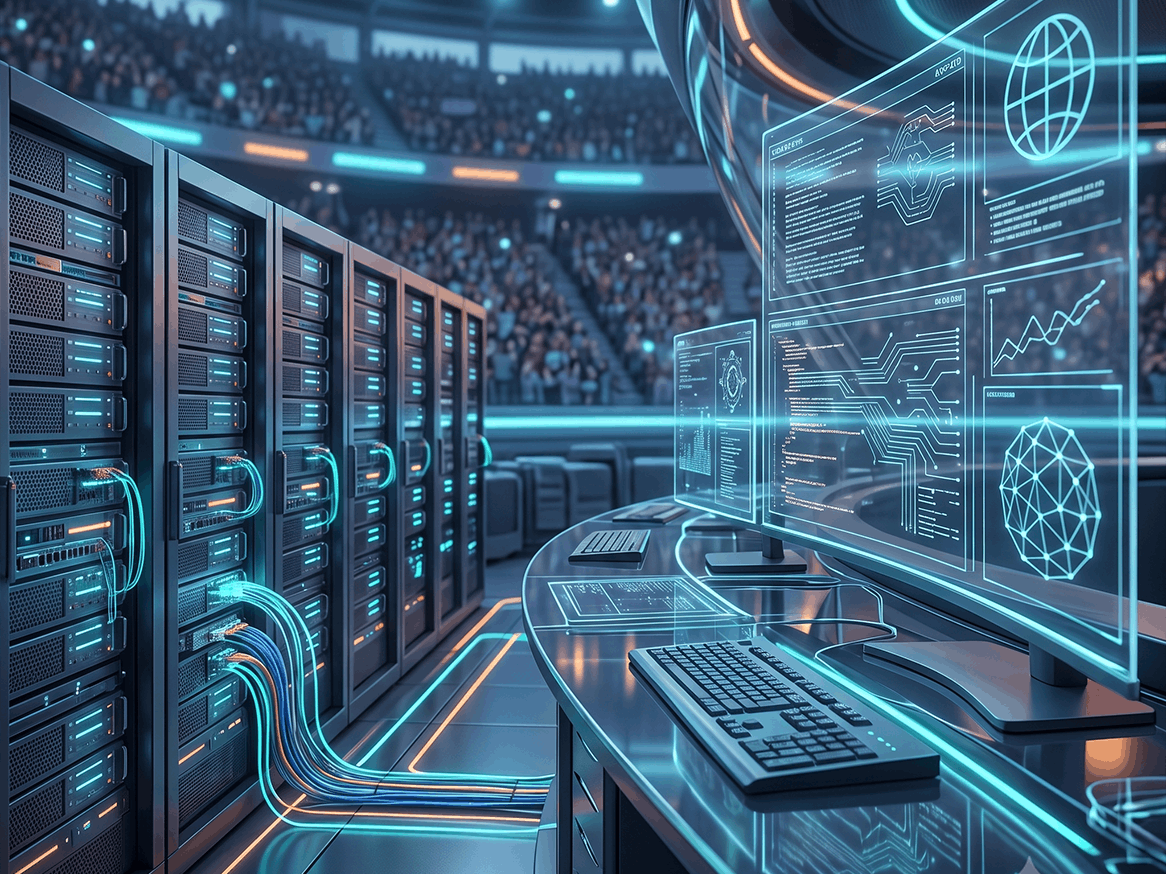
Infrastructure, caching, and CDN architecture load-tested and stress-tested ahead of the event, so peak capacity is proven before doors open, not discovered live.
Fans, participants, and organizers all need live updates - brackets, scores, schedules - and manual updates can't keep pace during a match.
Real-time leaderboard and bracket systems paired with event-management dashboards built for live tracking, so data updates as the match happens.
Content, community management, and event promotion sit in separate tools, so pre-event hype and post-event recap fall on the same overstretched team.
Integrated content and social workflows - a dedicated content-team pattern producing material in advance, with streamlined publishing across web, social, and community channels.
Technical issues during a live tournament affect thousands of concurrent participants and spectators at once, with no time for a slow support queue.
Dedicated tech-support workflows for the event window, troubleshooting guides tested in advance, and monitoring in place before the first match starts.
Community trust and participant safety - especially for a youth audience - get treated as an afterthought until something goes wrong.
Safety and community-management considerations designed in from the start, plus feedback loops (surveys, post-event analytics) that inform the next event.
Six product types we build repeatedly for this vertical - each adapted to your tournament format, audience, and broadcast partners.
Registration, seeding, and bracket systems built to stay accurate and fast as a tournament moves through rounds in real time.

Match-data feeds and leaderboard systems that update as the game happens, for both in-venue screens and the web audience.

Twitch, YouTube, and Discord integrations that connect the broadcast to the platform, so chat, schedules, and highlights live in one place.

Participant and spectator registration with payment processing built to hold up under a pre-event sign-up rush.

Publishing systems for news, recaps, and cross-genre content (gaming, music, pop culture) run by a content team, not a developer.

Traffic, engagement, and registration data turned into a report organizers and sponsors can actually use for the next event.
An esports platform rarely stops at one deliverable - a tournament microsite usually surfaces a need for registration and payments, then a community layer, then real-time scoring for the next event. We keep strategy, design, engineering, and growth under one roof so each phase builds on the last.
Not sure which piece to build first? Most engagements start with a two-week discovery sprint - you walk away with a scoped roadmap and a fixed estimate, whether or not you build it with us.
We pick the stack that fits the problem, not the one that's trending this quarter.
The result is a platform your own content, community, and ops teams can run between events - not a system only we can touch.
Yes - infrastructure and CDN architecture are load-tested and stress-tested for peak concurrent traffic ahead of the event, not discovered on the day.
Yes - Twitch, YouTube, and Discord integrations are a standard part of these builds, connecting chat, schedules, and highlights to the main platform.
A tournament microsite or event hub can ship in 6–10 weeks; a full platform with real-time scoring and community features typically runs 12–16 weeks in two-week sprints.
Yes - dedicated tech-support coverage for the event window is part of how we scope these engagements, alongside standard post-launch retainers.
Yes - community and safety considerations are designed in from the start, including moderation workflows and feedback loops rather than being added after an incident.