
Appointment scheduling & queue management
Unified scheduling across phone, walk-in, and online channels, cutting front-desk call volume and double-bookings.

Vibrant Info builds healthcare software development solutions that hospitals and clinics can trust with patient data - patient portals, appointment scheduling, and clinical-operations tools that cut front-desk load while keeping patient information handled responsibly. We built the digital patient experience for Dr. Agarwal's Eye Hospital, a leading eye-care institution, work that had to hold up to real appointment volume and real patient-data sensitivity, not just look clean in a demo.
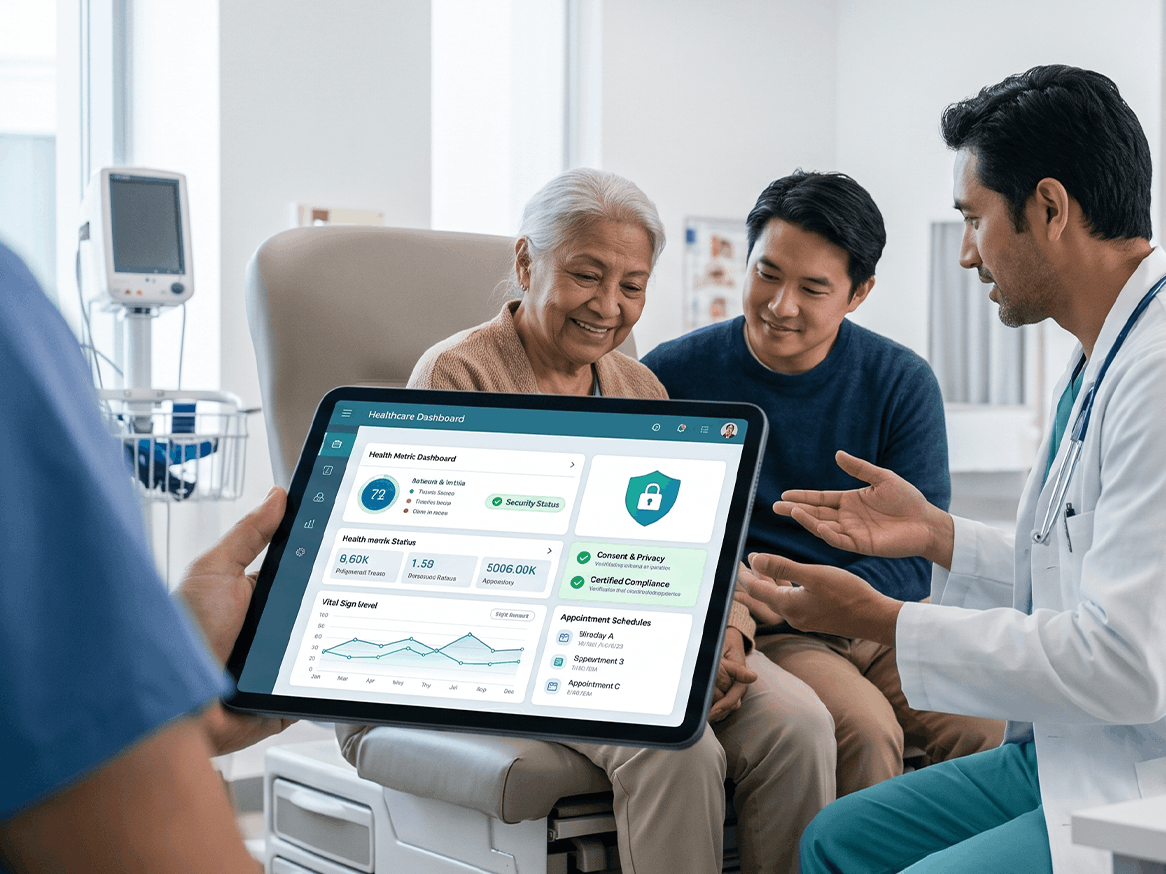
Dr. Agarwal’s Eye Hospital, a leading eye-care institution, worked with Vibrant Info to build patient-facing tools – appointment scheduling and portal experiences designed to reduce front-desk call volume and give patients a self-service way to book, reschedule, and access their care information. The build had to work for a patient base that skews older and less digitally native than a typical consumer app audience, without compromising on responsible data-handling practices a hospital is accountable for.
Healthcare software is judged by a stricter bar than most consumer software: a booking flow that’s merely inconvenient is a support ticket for most products, but for a hospital it’s a patient who calls the front desk instead, or worse, doesn’t book at all. India’s digital health market is expanding fast – IMARC Group values it at roughly $19 billion in 2025, growing toward $90 billion by 2034 – and that growth means more hospitals and clinics competing for the same patient attention, with trust as the actual differentiator.
For us, healthcare software development means building patient portals, appointment scheduling, and clinical-operations tools with accessibility and responsible data handling treated as requirements from day one, not a checklist added before launch. We work with hospitals, diagnostic centres, and clinics across specialities, on patient-facing tools as well as the clinical-operations software that runs the back office.
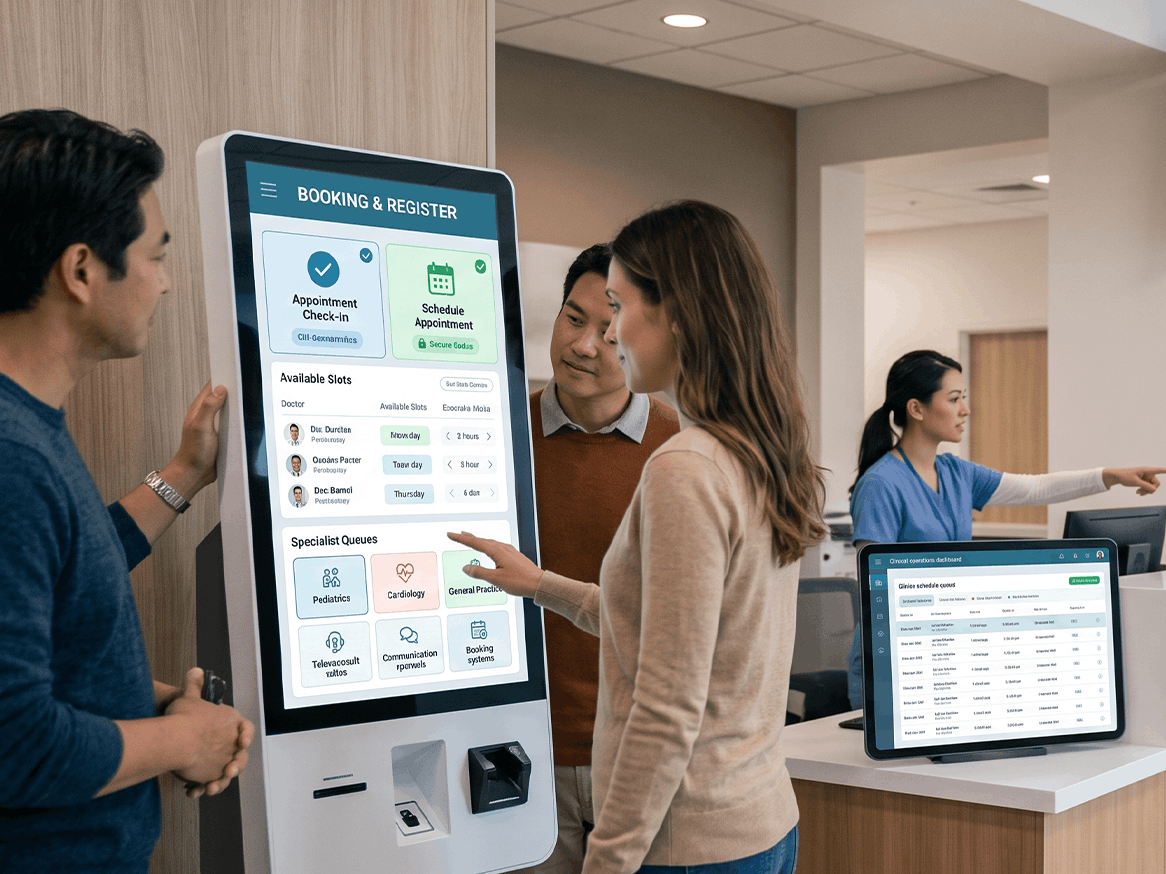
Patients call the front desk to book, reschedule, or ask basic questions because there's no reliable self-service option online.
Patient portals and booking flows built for a less digitally-native audience - simple, low-friction, and tested with real patients.
Front-desk staff manage appointment scheduling manually across phone, walk-in, and online channels, causing double-bookings and long queues.
Unified appointment-scheduling and queue-management systems that give front-desk staff one view across every booking channel.
Patient data lives in disconnected systems - the website, the HMS, and paper records - making care coordination harder than it should be.
Integrations between the patient-facing portal and the hospital's existing HMS/EHR system, so patient information stays consistent.
The hospital's digital presence doesn't reflect the trust patients need before booking a sensitive procedure.
Website and content work that builds credibility where it matters - doctor credentials, facility information, clear care information.
Self-service booking, rescheduling, and record access built for a patient base that isn't necessarily digitally native.
Unified scheduling across phone, walk-in, and online channels, cutting front-desk call volume and double-bookings.

Back-office tools that give hospital administrators a real-time view of scheduling, occupancy, and patient flow.

Connecting the patient-facing portal to your existing hospital management or EHR system, so data stays consistent.

Teleconsultation tools for hospitals and clinics extending care beyond in-person visits.

Credibility-first websites - doctor profiles, facility information, and clear care pathways - built to earn a booking, not just traffic.
Not sure which piece to build first? Most engagements start with a two-week discovery sprint - you walk away with a scoped roadmap and a fixed estimate, whether or not you build it with us.
We build for accessibility and responsible data handling from day one, not bolted on before launch.
The result is a patient portal your own team can maintain long after launch, not a black box only we can touch.
We build with data-handling best practices from day one - access controls, secure storage, and minimal data retention - and work within the compliance requirements your hospital or clinic already operates under.
Most factory dashboards ship in 8-12 weeks from discovery to launch, depending on how many stages and data sources need to be tracked.
Yes - we regularly integrate patient portals and scheduling tools with an existing HMS or EHR rather than asking a hospital to replace its core clinical system.
Most healthcare projects ship in 10–16 weeks from discovery to launch, depending on the number of integrations with existing hospital systems.
Yes - accessibility and simplicity are treated as requirements, not nice-to-haves, since a hospital's patient base often skews less digitally native than a typical consumer app audience.
Yes - ongoing maintenance covers monitoring, updates, and iteration, which matters more in healthcare than most verticals given patient-data sensitivity.